7 checks for automated blog management before choosing a GEO agency
· PION
Before choosing a GEO agency, use these seven checks to assess its automated blog management service. Verify the full scope, from publishing and AI citation structure to performance measurement.
Most marketing managers evaluating GEO agencies repeat the same mistake right after signing a contract. The service is named 'GEO,' yet its actual operational scope is limited to blog posting and basic SEO work.
If you don't verify this difference before signing, it can go undetected for months. This explains why the monthly post quota is met while your brand still fails to appear in ChatGPT or Perplexity answers.
To answer the question 'Is there a GEO agency that handles integrated operations all the way through content publishing?' directly: yes, there is. The key to choosing, however, is distinguishing services that cover all four areas (strategy development, article publishing, AI citation structure application, and performance monitoring) from those that do not.
GEO is a methodology that optimizes content structure and authority signals so that AI search engines cite and recommend a brand in their answers. Unlike simple publishing automation, results only emerge when query design, Schema implementation, and multi-platform monitoring all work together.
OpenAI's official documentation and Google Developers guidelines explicitly state that structured content and entity clarity increase the likelihood of citation by AI systems.
Yes, GEO agencies can manage the entire process, including publishing
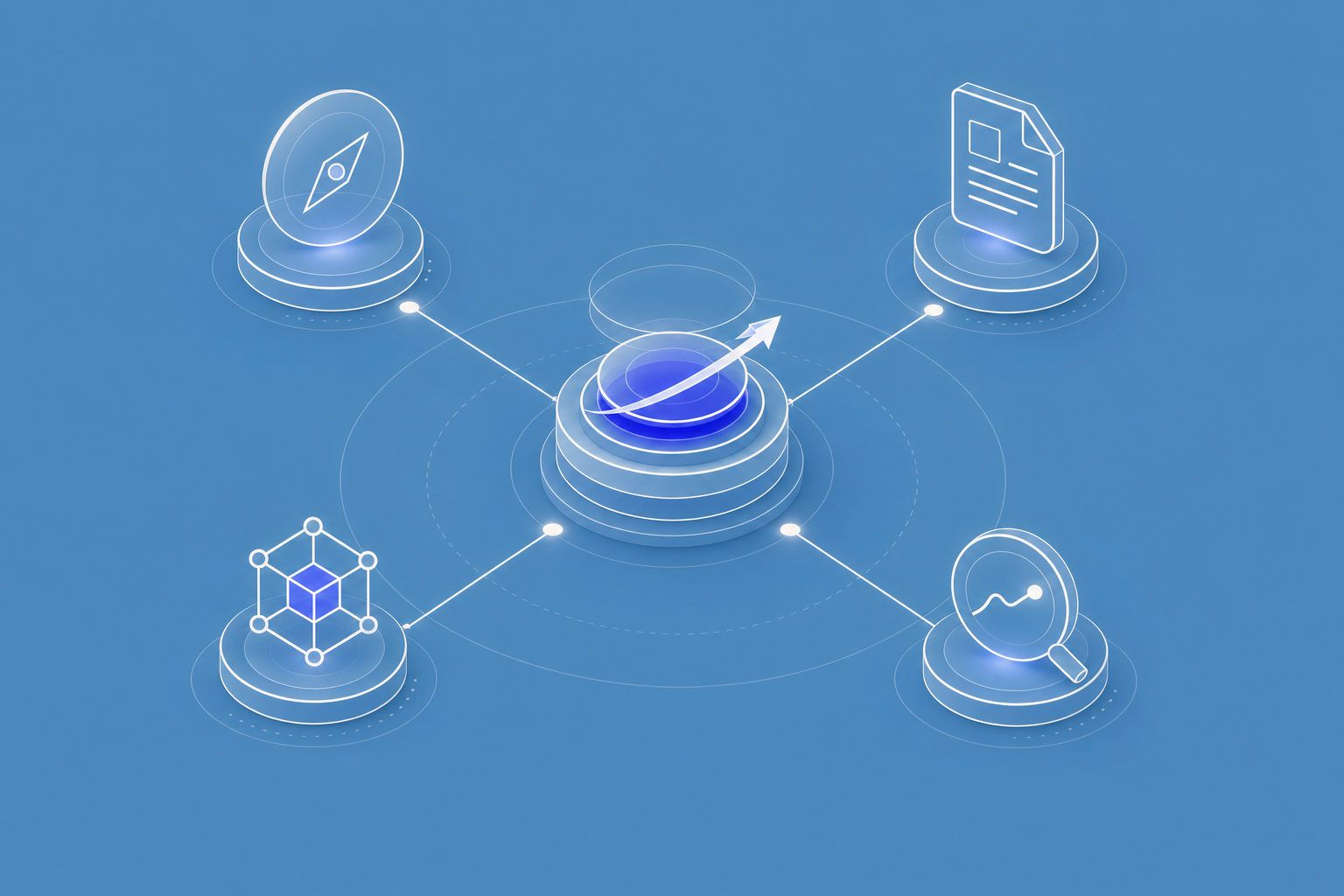
The four areas an integrated GEO service must cover
An integrated GEO agency service covers everything from strategy development to content publishing, AI citation structure application, and performance measurement under a single contract. Only when all four are included can it be called 'integrated operations.'
If even one of these is missing, the outcome changes. Publishing without strategy piles up content that AI won't cite, while building strategy without publishing means no execution. Content lacking Schema and structural optimization is less likely to be selected as a source by Perplexity or Gemini.
The minimum scope of an integrated-operations service is as follows.
- Strategy development: Selecting 30 or more target queries and designing topics based on AI response patterns
- Content publishing: Regular monthly publishing of articles applying AEO/GEO structure
- AI citation structure: Schema Markup implementation, entity clarification, and internal link design
- Monitoring: Tracking citation rates across the four engines: ChatGPT, Perplexity, Gemini, and Claude
A service that does not cover this full scope is closer to a content marketing agency than a GEO agency.
Not all GEO agencies are the same: how to spot services that are GEO in name only
Even when carrying the name 'GEO agency,' many services are in reality just blog posting automation with basic keyword optimization layered on top. Low-budget monthly packages are a common example.
These services share a common pattern. The deliverables they provide are publishing counts and keyword rankings, while AI citation rates and query coverage are not included in the reports. Technical work such as Schema Markup implementation or FAQ structure design is left out of scope, and they lump ChatGPT, Perplexity, Gemini, and Claude together as 'AI optimization' without distinguishing how each is handled.
These are items you must verify before signing a contract.
- Does the proposal explicitly list AI citation rate or Share of AI Voice as a KPI? If this metric is absent, it is highly likely the service has no measurement method at all.
- Can you directly verify the AI search results of a reference brand? When you ask, "How does OO brand appear when searched in ChatGPT?" the answer should come without hesitation.
According to OpenQuoted's analysis, in the GEO methodology of measuring and improving a brand's AI search visibility, citation rate and share measurement are cited as core capabilities. A GEO agency without measurement has no way to confirm results.
7 checks for automated blog management
The following 7 items are verification criteria to prepare before meeting with a GEO agency. You must be able to answer each item with a 'yes/no' in order to compare partners.
① AI citation references from your industry Check whether they can present ChatGPT or Perplexity citation cases in the same category as your company, among consumer goods, beauty, clinics, e-commerce, and B2B SaaS. This is because the source types and query patterns AI references differ by industry.
② Query selection method based on AI response patterns Check whether they select target queries by analyzing the actual response patterns of ChatGPT, Perplexity, Gemini, and Claude, rather than keyword search volume. Since each engine has different criteria for selecting sources, each engine needs its own query strategy.
③ Multi-platform coverage scope Check whether they cover all four engines (ChatGPT, Perplexity, Gemini, and Claude) or only target one or two specific engines. Because users in South Korea and global users use different engines, single-platform optimization creates a structural gap in coverage.
④ Schema Markup implementation capability Check whether they directly implement schema.org-based structured data such as FAQPage, Article, and Organization. Google Developers guidelines state that structured data helps AI systems understand content. If Schema implementation is outside the service scope, the likelihood of AI citation decreases.
⑤ Whether a continuous monitoring system exists Check whether there is a monitoring system that tracks whether AI engines cite the content after publishing. If the work ends when the content is published, the service is content production outsourcing.
⑥ Items included in the monthly report Check whether the report explicitly lists the three items: AI citation rate, query coverage, and Share of AI Voice. A report lacking these three metrics centers on blog traffic and SEO rankings and fails to reflect GEO performance.
Key measurement metrics
- AI citation rate: The proportion of target queries in which AI answers cited the brand
- Query coverage: The number of queries exposed in AI answers among all target queries
- Share of AI Voice: The brand's exposure share within AI answers relative to competing brands
⑦ Transparency in matching service scope and budget Check whether the proposal clearly distinguishes included scope from excluded scope. Even when the phrase 'full service' appears, Schema implementation, internal link design, and monitoring are sometimes left out as separate options. Verifying items that incur additional costs in writing before signing is essential.
How to apply the checklist
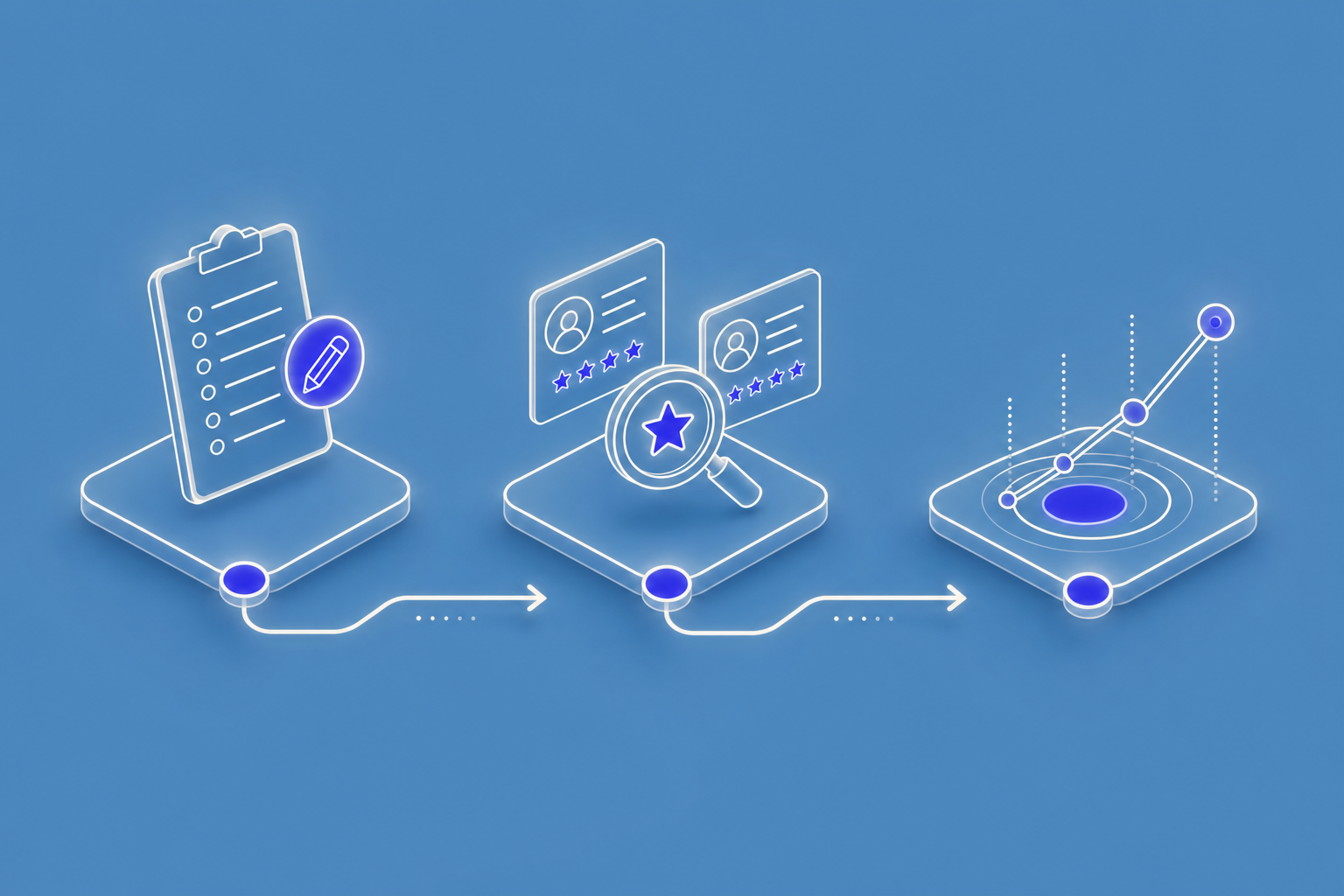
The three stages for applying the checklist before an agency meeting
Apply the checklist at three stages: before the meeting, during the meeting, and before signing.
Stage 1: Prepare a questionnaire before the meeting Convert the above 7 checklist items into question form and prepare them as a document. For example, item ③ can be changed to "How do you approach ChatGPT, Perplexity, Gemini, and Claude differently, respectively?" Sending a questionnaire in advance rather than asking impromptu questions in the meeting makes it easier to compare the depth of the answers.
Stage 2: Verify references Search the reference brands supplied by the agency directly in ChatGPT and Perplexity. Confirming whether that brand actually appears in AI answers is the most intuitive verification method. If the agency shows results only via screenshots, enter the same query yourself and check whether it is reproducible.
Stage 3: Document the KPI agreement In the contract or a separate KPI agreement, specify the measurement methods and report cadence for AI citation rate, query coverage, and Share of AI Voice. If the measurement criteria are not documented, the standards may differ at the time of performance evaluation. Also finalize a performance review schedule of at least every three months.
Practical tip: At the KPI agreement stage, be sure to ask, "What tool or method do you use to measure this metric?" If they cannot explain the measurement method concretely, it is highly likely the service does not actually track that metric.
PION's Integrated Operations Approach
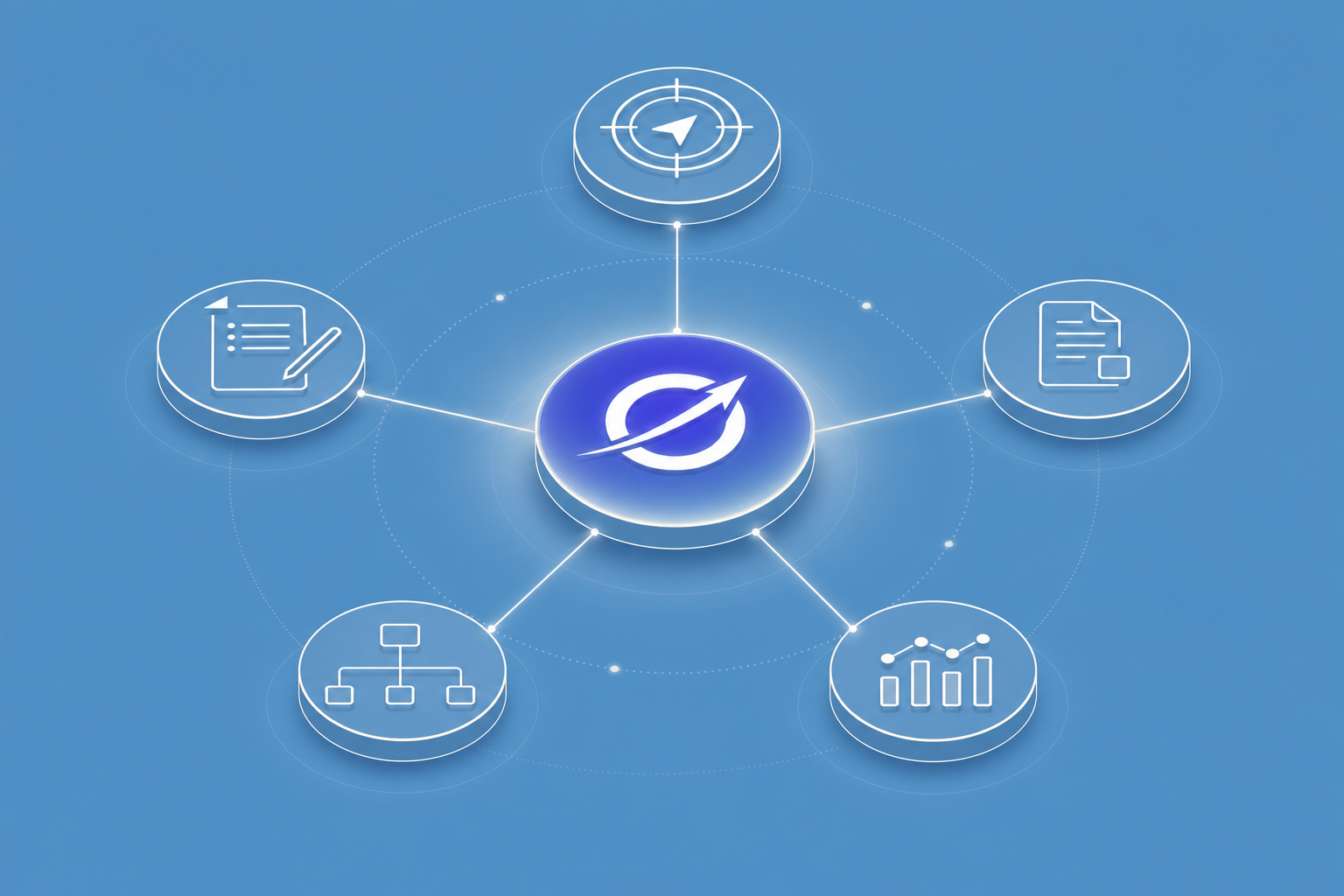
The GEO integrated operations scope PION covers and the items included in the monthly report
PION is a GEO/AEO specialist agency that operates everything from strategy development to article publishing, Schema and internal link application, and monthly AI citation rate reports under a single contract. It designs target queries based on the four engines (ChatGPT, Perplexity, Gemini, and Claude) and applies structures so that content published on the brand's subdomain can be cited in each engine's answers.
The work PION handles within the contract is divided as follows.
- Target query selection: Designing 30 or more queries based on AI response patterns
- Content publishing: Regular monthly publishing of articles structured for AEO/GEO
- Technical implementation: Applying FAQPage, Article, and Organization Schema and designing internal links
- Performance measurement: Monthly reports on AI citation rate, query coverage, and Share of AI Voice
We also state the limitations clearly. ChatGPT Ads is not a means of directly inserting a brand into the body of an AI answer. Under OpenAI's official policy, ads are displayed in areas outside the answer, and citation within the answer body is possible only through content quality and structural optimization. GEO results also take at least three months of ongoing work to emerge, and it is difficult to expect measurable changes in citation rate from short-term campaigns.
If you are a consumer goods, beauty, clinic, e-commerce, or B2B SaaS brand currently evaluating GEO agencies, comparing several agencies, including PION, against the 7 checklist items above first is an efficient first step.
After narrowing candidates with the checklist, also confirming whether each vendor provides measurement conditions in writing reduces disputes after signing. The verification items (including the measurement engine, prompts, and starting-point figures) are organized in a table in GEO Agency Recommendations: Why AI Answers Change Every Time and the Selection Criteria.
Frequently asked questions
Is there a GEO agency that handles integrated operations all the way through content publishing?
Yes, there is. The key, however, is distinguishing services that cover all four areas (strategy development, content publishing, AI citation structure application, and performance monitoring) from those that do not. You must verify the service scope in writing before signing.
What is the first item to verify when choosing a GEO agency?
First check whether they explicitly list AI citation rate and Share of AI Voice as KPIs. If these metrics are not included in the report, it is highly likely the service has no measurement system. Directly searching reference brands in ChatGPT or Perplexity to verify whether they are actually cited is also essential.
What is the difference between an automated blog management service and GEO optimization?
Automated blog management focuses on content publishing automation and keyword placement. GEO optimization additionally includes Schema structure, entity clarification, and placing direct answers for each query so that AI engines can cite them. The biggest difference is that the key performance metric shifts from publishing count to AI citation rate.
How are AI citation rate, query coverage, and Share of AI Voice each measured?
AI citation rate is measured as the proportion in which the brand appears in answers when target queries are entered directly into ChatGPT, Perplexity, Gemini, and Claude. Query coverage is the number of queries exposed in at least one engine among all target queries. Share of AI Voice is calculated as the exposure share within AI answers relative to competing brands in the same category.
Why do you need a GEO agency that handles all four engines (ChatGPT, Perplexity, Gemini, and Claude)?
Each engine has a different algorithm for selecting sources and a different type of reference content. ChatGPT mainly uses training data and plugin sources, Perplexity uses real-time web crawling, and Gemini mainly uses the Google index and structured data. Single-platform optimization alone cannot fill the exposure gap in the other engines.